Pause before you scrub
The instinct is to grab a sponge and bleach. For a tiny spot on tile, that can be fine. For growth on drywall, wood, or anything larger than a small patch, scrubbing tends to release spores into the air and can push moisture deeper into the material.
Leave larger growth alone until you know how far it extends. Close the door to the room if you can.
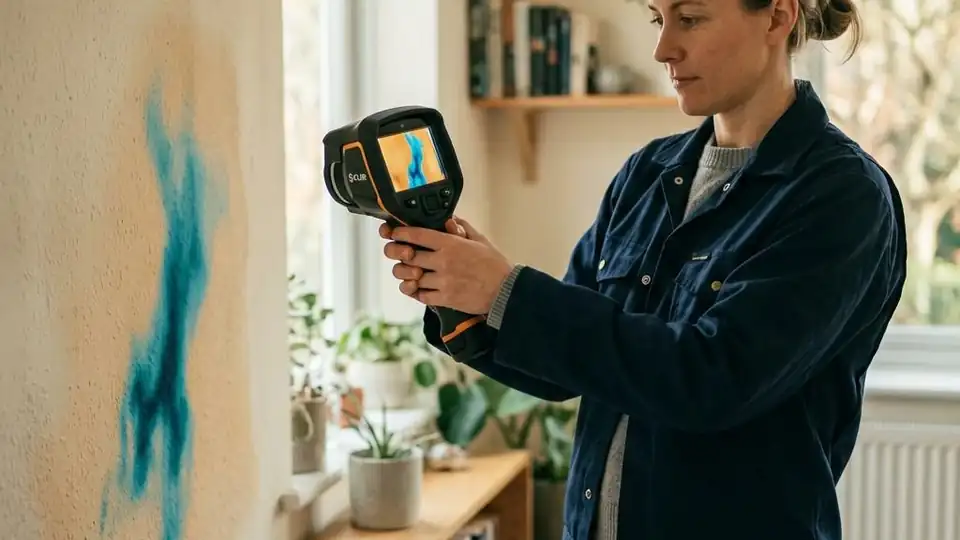
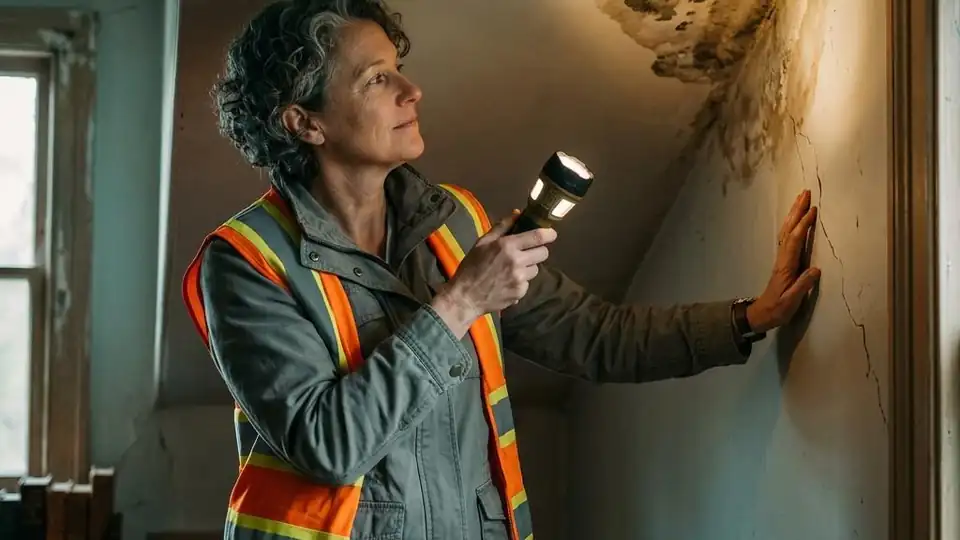
Look for the water
Mold always has a moisture source. Check above the growth for plumbing, a bathroom, or the roofline. Check below for a damp floor or foundation wall. Think back over the last few months: a leak, a backup, a storm, a humid summer with the windows shut.
Write down what you find and take photos. That history helps anyone you call.
Protect people and belongings
Move valuables away from the affected area if you can do so without disturbing growth. Keep children and pets out. If anyone in the home has asthma or a weakened immune system, consider limiting their time near the area until it has been addressed.
Decide when to call
Call for professional help when the growth covers more than a small patch, returns after cleaning, sits on drywall or insulation, follows a flood or sewage backup, or comes with a musty smell you cannot trace. A mold inspection can show how far it goes and what is feeding it.